Posted: 24/07/2026 • 7 minutes read
Everything You Need to Know About Peatlands
Peatlands are some of our most incredible, important habitats filled with interesting and unusual plants. But what are they? How do you know if you’re in a peatland? And why are they so vital to plants, people and the planet?
Join us for a deep dive into the wonderous world of peatlands!
What is Peat?
Peat is a soil-like substance, dark brown to black in colour with a soft and damp texture. It’s created from partially decomposed organic matter, such as plants like Sphagnum Moss and forms very slowly in waterlogged, acidic conditions.
What Are Peatlands?
Peatlands are amazing wetland habitats. They form specifically due to the water in the habitat. The water prevents air from reaching organic matter like dead plants. Without oxygen, it prevents this matter from decomposing in the same way that it would elsewhere in places like woodlands or grasslands. Over a vast amount of time, this process creates peat – it forms at just 1mm per year. [1]
The peat and the water together create a unique habitat where we see wild plants that are not found anywhere else. These incredible plants include carnivorous sundews and beautiful Bog Asphodel.
Keep reading to see what other amazing species peatlands are home to.
Are Peatlands and Bogs the Same Thing?
This is an interesting question and it’s a bit of a yes and no. While bogs and peatlands are sometimes used interchangeably, they’re not quite the same thing. Bogs are actually just one type of peatland habitat. So, all bogs are peatlands, but not all peatlands are bogs.
What Types of Peatlands Are There?
There are three types of peatland that can be found here in the UK [1]:
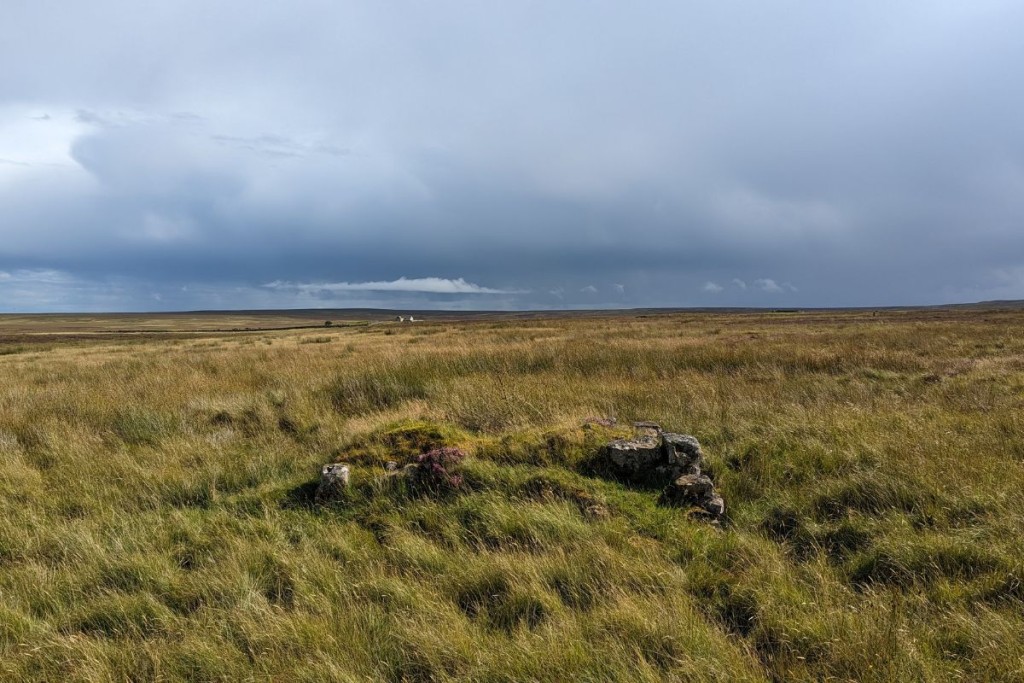
– Blanket bogs: these bogs, like Plantlife’s Munsary Peatlands Nature Reserve, are vast spectacular landscapes that are usually found in upland areas. Munsary, for example, is part of the world’s first UNESCO World Heritage peatland, The Flow Country in the Scottish Highlands, which covers a staggering 187,000 hectares.
– Raised lowland peat bogs: opposite to the blanket bogs, these habitats usually form in valleys on low-lying ground. As the name suggests, the actual peat can be so deep it becomes raised above the level of the surrounding land found in lowland areas. The peat created here can be 3–9 metres deep, with each metre depth taking about 1000 years to form. This is the type of bog which is most commonly extracted (dug out) for use in horticulture.
– Fens: unlike blanket bogs and raised lowland peat bogs, which are fed only or mainly through rainwater, fens are fed mainly via rivers and groundwater. They tend to have shallower layers of peat and can be found in various wider habitats including moors and some farmed land, for example in East Anglia. Fens are home to beautiful rare plants like the fascinating Fen Orchid.
Whilst there are three types of peatland, these can be found in various wider habitats including moors and some farmed land. [2]
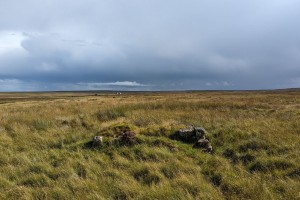
View across Munsary Peatland Nature Reserve
How Old Are Peatlands in the UK?
Peatlands grow slowly, accumulating around 0.5 to 1 mm of peat each year. This means that many areas of UK peat bog have been accumulating gradually for as much as 10,000 years, and can be up to 10m deep!
Due to its slow accumulation, peat is often classified as a fossil fuel.
How to Tell if You Are in a Peatland?
There’s a couple of different things that you can do to try and work out if you’re in a peatland:
- Firstly, take a look at the wild plants around you – use the list below to see if you can spot any peatland plants.
- Have a look at the colour of the soil– is it particularly dark almost black? This may indicate the presence of peat.
- Does the ground feel spongey to walk on? Peatlands often feel spongey and bouncy due to the high abundance of Sphagnum Moss and high water tables.
- Is the ground squelchy? Due to peatlands being wetland habitats, it’s likely that you will be able to spot pools of water, or see them form around your foot as you walk.
Why Are Peatlands Important for Plants, People and the Planet?
There are countless reasons that peatlands are incredible! Here’s a few of our favourites:
- Peatlands are home to some of the UK’s most distinctive plant communities. Diverse organisms have evolved in response to the low-nutrient conditions which has led to some remarkable adaptations, like the insect-eating sundews and butterworts, and the spongy blankets of colourful sphagnum mosses – capable of holding on to 20 times their own weight in water.
- Peatlands are one of our most important terrestrial carbon sinks. They lock up billions of tonnes of carbon (3.2 billion tonnes in the UK alone), for millennia, unlike woods and forest for example which lock up then release carbon in a cycle. But, when bogs are drained or the peat is exploited, the peat is exposed to the air and begins to break down, releasing carbon dioxide. This turns a huge carbon store into a vast emitter, contributing to climate change. According to the IUCN, a loss of only 5% of UK peatland carbon would be equal to the UK’s annual greenhouse gas emissions [3].
- Peat bogs act like a sponge, soaking up rainwater, so they can help to reduce flood risk. Water filtered through healthy peat bogs is also of a higher quality than water from degraded bogs, making it cheaper to treat as drinking water. In fact it is estimated that up to 70% of Scotland’s drinking water if filtered through peatlands. [4]
What Animals and Plants Can You Find in Peatlands in the UK?
Peatlands are bursting with biodiversity! As well as the wonderful wild plants we’ve mentioned above such as the carnivorous sundews and butterworts, the soft Sphagnum Moss and beautiful Bog Asphodel, there are many others you can find.
Look out for cotton grasses, rare sedges, Cuckooflower, Marsh Violet, Marsh Cinquefoil and Marsh Willowherb.
But it’s not just plants, there’s a whole host of animals that also call our peatlands home from butterflies and dragonflies to birds such as snipe and curlews, merlins and skylarks.
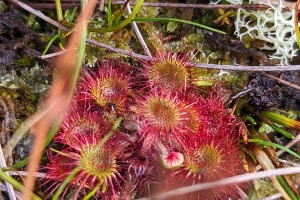
Stunning sundews
References
[1] UK Centre for Ecology and Hydrology
[2] Plantlife
[3] IUCN UK Peatland Programme
[4] Nature Scot